
Support agents
Assistants that answer from documentation and live system data, and open a ticket for staff when a question needs a person. The ACCESS AI Assistant works this way.
AI agents and integrations
We build AI assistants and agents for research computing programs. They answer from your documentation, read live data from your systems, and act for a user with that user's own permissions. We test them against questions your staff write, so you know how well they work before your users rely on them.
Assistants that answer from documentation and live system data, and open a ticket for staff when a question needs a person. The ACCESS AI Assistant works this way.
MCP (Model Context Protocol) is an open protocol for connecting AI tools to outside data. We wrap existing APIs so assistants can read allocations, system status, events or software listings.
An Open OnDemand app that lets an assistant submit jobs, read output and manage files, running as the signed-in user under your site's existing policies.
Tools that check submissions against a rubric and draft feedback for a reviewer to approve. We use one for Open OnDemand Appverse submissions.
One agent that answers ACCESS documentation questions and live questions in the same conversation, like which GPU resources are available or what is down for maintenance. It draws on 11 live data servers covering allocations, compute resources, system status, events, announcements, software, affinity groups, NSF awards, usage charts, usage data and ticketing. Supported by NSF award 2138286 under the ACCESS program.
Read the case story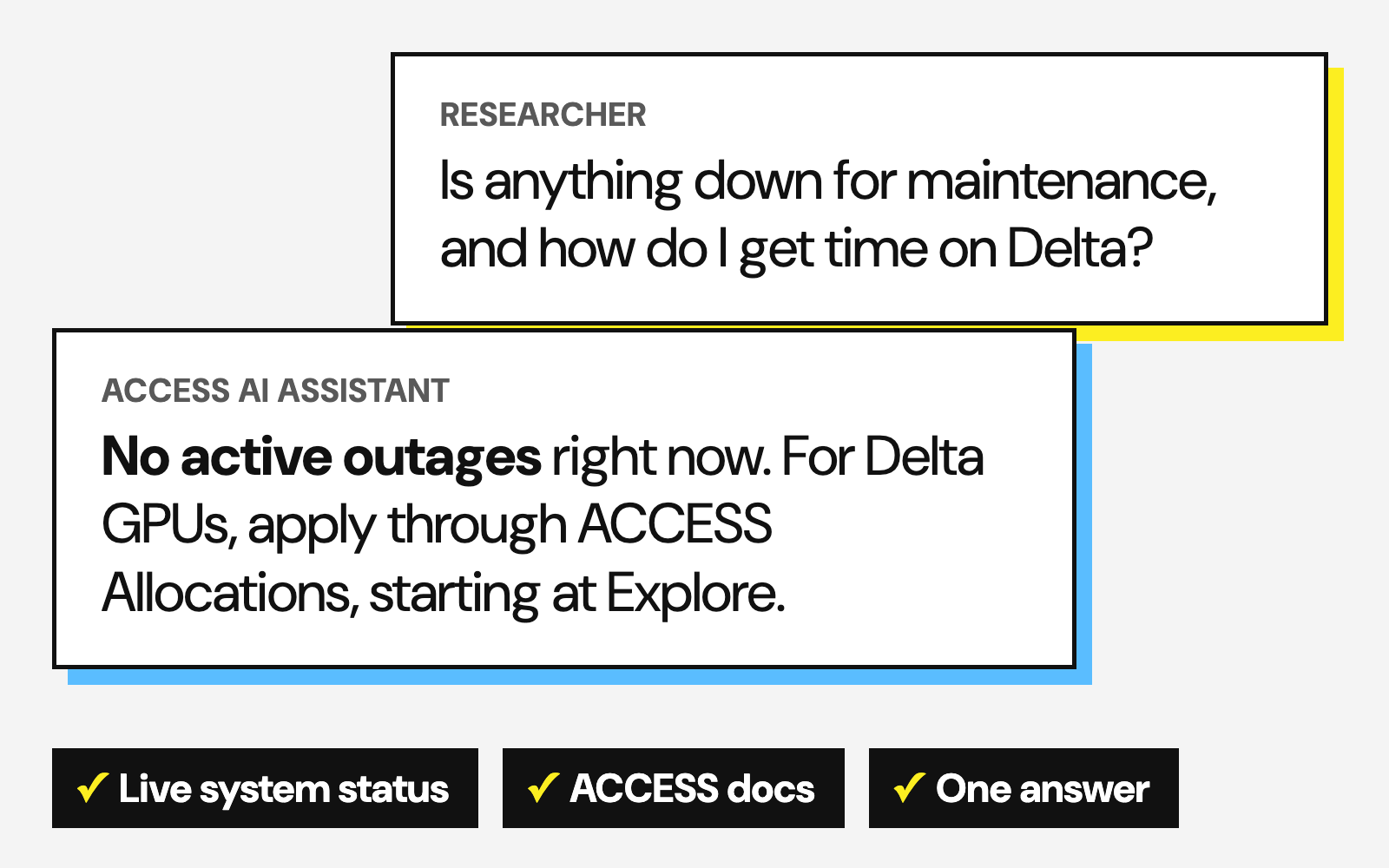 (open full size)
Public MCP servers for the ACCESS program, hosted at mcp.access-ci.org. Anyone can add one to Claude and ask about ACCESS resources in plain language.
See the setup guide (external site)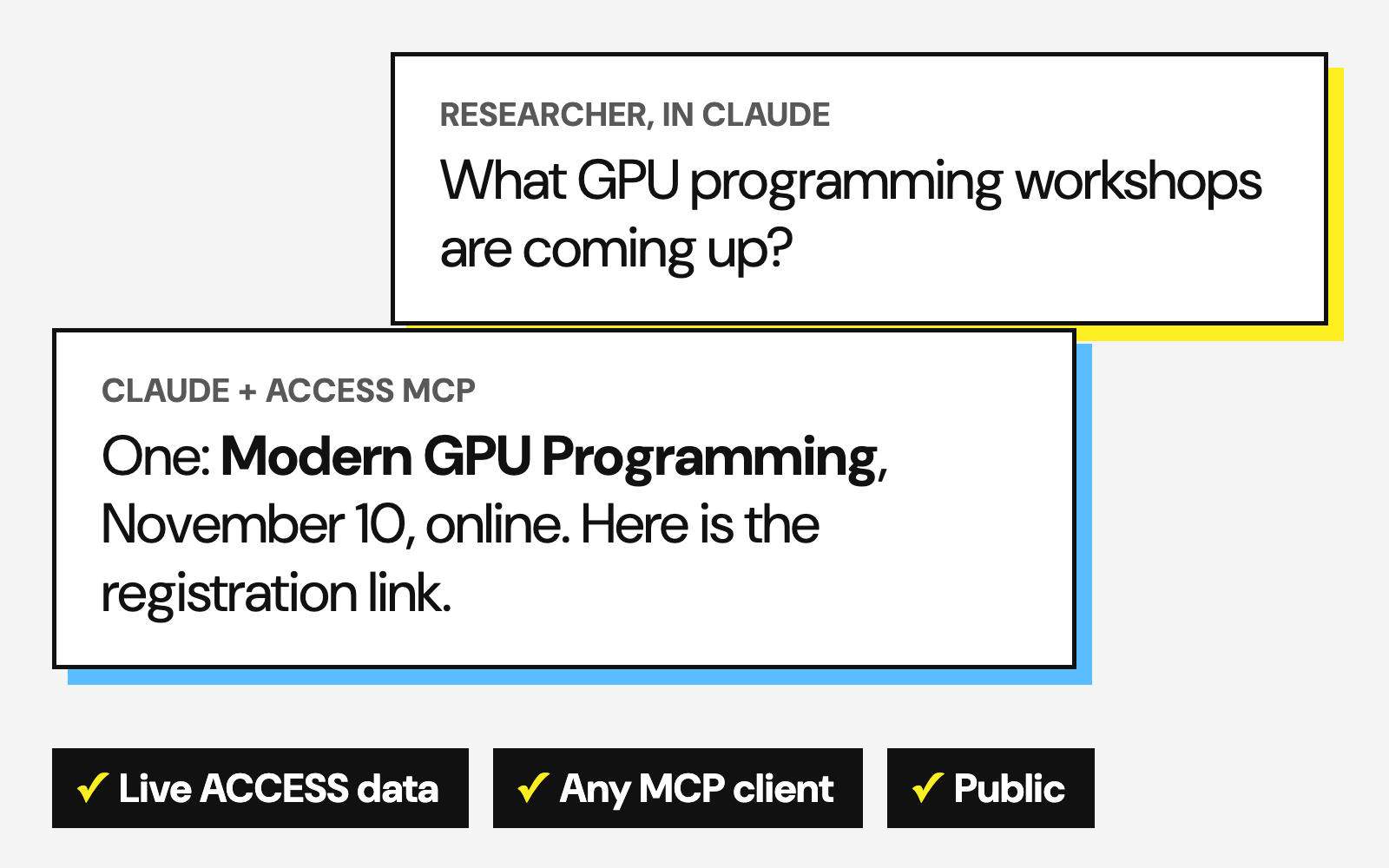 (open full size)
An Open OnDemand app that lets researchers and their AI assistants submit jobs, manage files and check on their cluster without a terminal. Every request runs as the signed-in user, inside the permission model Open OnDemand already has. Site operators set local policy in a plain text file that every AI client reads before acting. It is early software.
See the OOD API code (external site)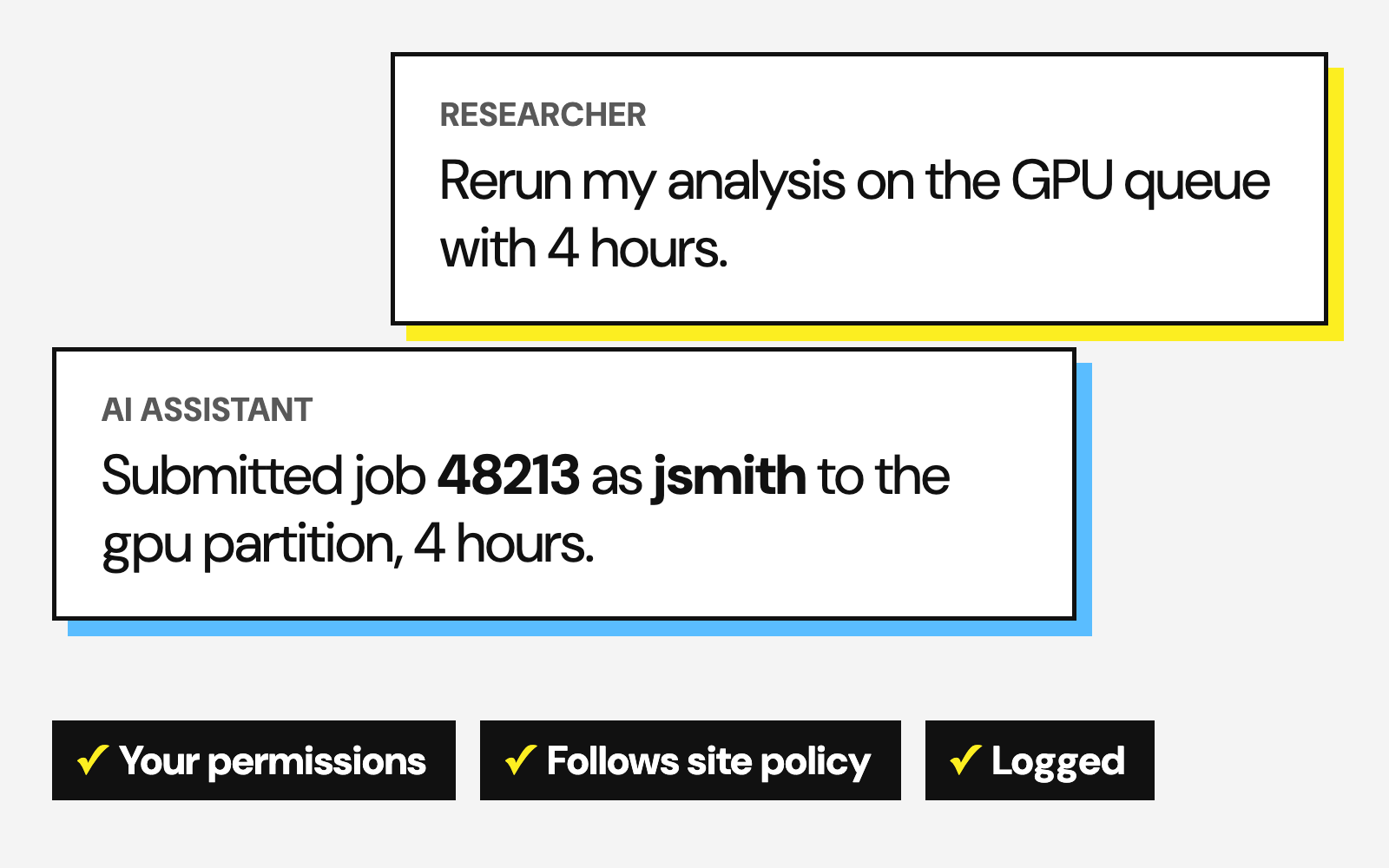 (open full size)
A Claude Code plugin that reviews app submissions to the Open OnDemand Appverse for structure, security, quality and maintenance. It produces an evidence-backed report and a draft reply, and a human reviewer decides.
See the review assistant code (external site)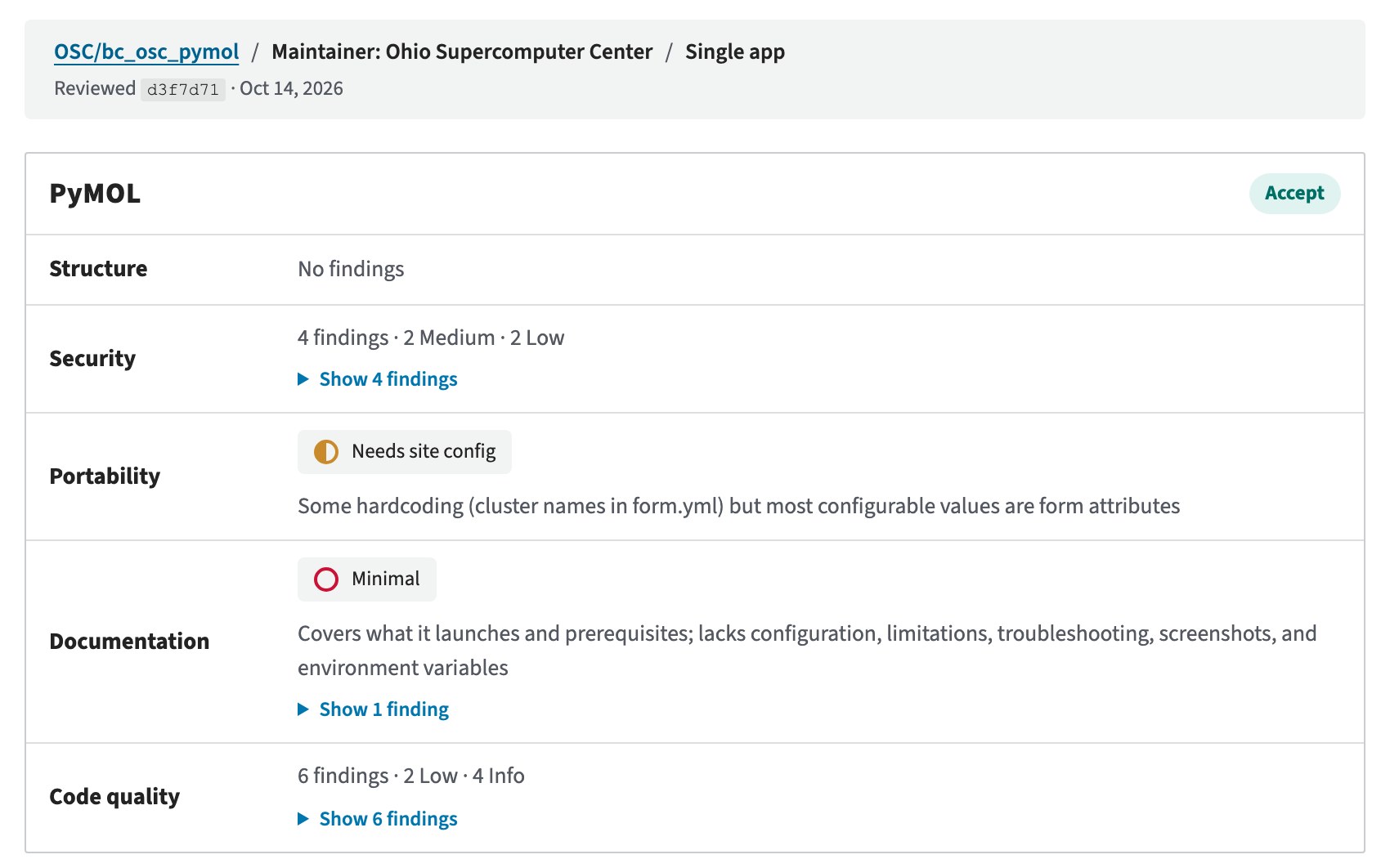 (open full size)
We can build on our work for NSF ACCESS to quickly set up the backend that informs your AI assistant.
Have budget now? A one or three week discovery sprint can map the work first.
For a new proposal we provide budget text and a statement of work. Funded programs bring us on as a contractor.
We connect your documentation and systems, and release early to a pilot group of your users.
Test results become numbers for your annual reports.
Hosting, updates and tuning, every year.
HUST workshop at SC26 · Accepted, November 2026
A. Pasquale, V. Gazula, J. E. Bacal
How the ACCESS AI Assistant combines documentation search with live data from MCP servers, and how we test its answers.
Tell us what your users ask most and where your data lives. We can write the work into your next proposal, or start under your current award.